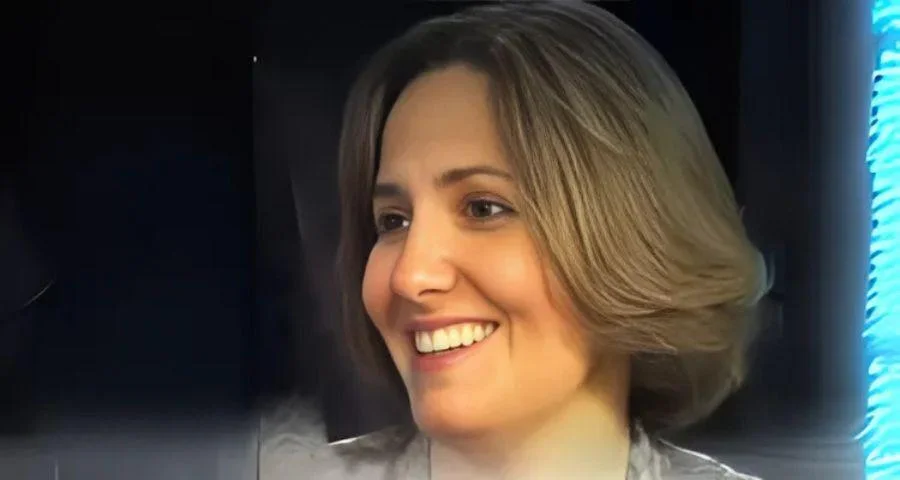
Elizabeth “Betsy” Corcoran, Co-founder and CEO | EdSurge Research
Melanie Fisher, a fifth-grade teacher in Utah’s Jordan School District, is among educators working to teach civics and the Constitution amid increasing political tensions. She integrates civics lessons into her classroom while emphasizing civil discourse, noting, “A lot of things being brought up in a classroom can feel scary for educators,” and “being able to model civil discourse with them...is so needed in classrooms today.”
Fisher has not encountered pushback from parents or community members regarding her teaching methods. She relies on the Center for Civic Education’s “We the People” program, which aligns with curriculum standards across all 50 states. Additionally, she draws on training from Utah Valley University’s summer Constitutional Literacy Institute.
The institute, operated by UVU’s Center for Constitutional Studies, hosts about 20 to 25 participants annually—primarily from Utah—for an intensive weeklong session focused on academic expertise rather than partisanship. According to Scott Paul, executive director of the center, “We stick with an academic approach and try to stay away from polemics.” He added that instructors represent diverse political and ideological backgrounds.
Paul emphasized the centrality of constitutional principles: “We view civics through a constitutional lens. We’re always trying to connect things back to our constitutional tradition, the constitutional order, and certainly constitutional principles, if not the text itself.”
This year’s institute included lectures on foundational topics such as federalism and the separation of powers in the mornings and practical classroom strategies in the afternoons. The program also addressed how to present contentious issues like the Civil Rights Act of 1964.
Participants report that this combination of theory and practice helps them engage students more effectively. Fisher now uses activities such as re-enacting the Constitutional Convention and encourages respectful exploration of different viewpoints. She stated, “Nothing we’re doing here or talking about can’t be discussed at home.” She observed that younger students are generally open to differing interpretations of the Constitution but noted that controversy increases as students get older.
Brittany Holman from Brigham Young University attended the institute in 2020 and now serves as an instructor. She highlighted the importance of using primary documents: “The biggest thing is using primary documents to show that this isn’t me putting that thought, this is what the Constitution says...Here’s a case that says this, but here’s a case that says something different.”
Access to reliable resources is crucial for effective civics education. The Quill Project—a collaboration between Pembroke College at Oxford University and Utah Valley University—offers digital research tools on American constitutional history. Nicholas Cole, director of Quill Project at Pembroke College, explained its purpose: “The broader agenda is the history of deliberative democracy and deliberative institutions and trying to give people a sense of how that worked across time.”
Despite differences between Pembroke College (founded in 1624) and UVU (established in 1941), their partnership continues an Anglo-American tradition rooted in shared legal heritage.
Jane C. Lo from Michigan State University noted that civic education was once broadly agreed upon but has been neglected over recent decades due partly to educational policy shifts like No Child Left Behind prioritizing math and literacy over social studies. Teachers now face additional challenges due to information overload online: “Teachers know they have a responsibility to help young people make sense of what they’re being exposed to online,” Lo said.
Donna Phillips, president and CEO of the Center for Civic Education—which provides resources including "We the People"—sees potential benefits for literacy outcomes when civics is taught well: “We’re seeing an opportunity to show that if you do civics well, you will hit those literacy outcomes.” Phillips advocates starting civics instruction early for lasting impact.
Doug Welton—a Republican legislator representing Utah District 65 who also teaches high school debate—said civic principles are integral both inside his classroom and within his legislative work: “When we talk about engagement, we talk a lot about constitutional principles.” He recounted defending students’ right to protest under free speech protections during his tenure as a town councilman.
Welton co-sponsored legislation recently passed in Utah requiring high school students take a full credit rather than half-credit course in government/civics: “It doesn’t matter how much math or science or anything else you know if society falls apart because we can’t engage in meaningful dialogue when we disagree,” he said.



 Alerts Sign-up